Best Red Dot for Shotguns: Turkey, Slug & Home-Defense Loads (2026)
Key Takeaways
- The global red dot sight market is projected to reach $9.8 billion by 2026, and shotgun-mounted red dots are the fastest-growing sub-segment behind pistol optics (Polaris Market Research, 2025).
- Shotgun red dots have to survive three things that break pistol and rifle optics: double-recoil impulse from magnum shells, rib-mount vibration, and wet-field waterfowl conditions. IP68 waterproofing and a top-loading battery aren't luxuries — they're the price of admission.
- For turkey, slug guns, and home-defense loads, a 3–6 MOA dot on the RMR footprint is the sweet spot. The Cosmic Tactical Mercury hits that window at $249.95 — with a 4-reticle selector and IP68 rating that survives duck-blind rain.
- Vortex Viper dominates every "best of" list because it's cheap and warrantied. But it's IPX7-rated, side-loading, and not made in the USA. There's room on this list for an honest alternative.
The shotgun optic market changed in the last three years. What used to be a fiber-optic bead or a ghost-ring peep is now, more often than not, a small red dot bolted to the receiver or the rib. Turkey hunters figured it out first. Slug gun deer hunters followed. Home-defense shooters running Mossbergs and Benellis were next.
The problem: most "best red dot for shotguns" articles are built around the same three optics with the same three affiliate links. They also skip the specs that actually matter — recoil rating, waterproof standard, battery access, and dot size for choke pattern — in favor of star ratings and star-ratings-shaped filler.
This guide covers what matters. If you shoot a shotgun for turkey, deer, waterfowl, or home defense, here's how to pick a red dot that won't crack after your first box of 3-inch magnums.
What Makes a Red Dot Right for a Shotgun?
Shotgun recoil is different from rifle or pistol recoil, and that difference kills optics. A 12-gauge 3-inch magnum slug can generate 45–55 ft-lbs of felt recoil — roughly double what a 5.56 AR-15 produces, and delivered in a sharper impulse (Chuck Hawks Recoil Table). That kind of double-tap impulse — one spike as the shell fires, another as the bolt cycles — is what separates a shotgun-rated red dot from an optic that walks off zero by round 50.
Four specs decide whether a red dot survives on a shotgun:
- Shockproof rating that names shotgun loads, not just "recoil." Manufacturers who publish spec sheets for their optics almost always test on pistols and rifles. Look for language like "tested on 12-gauge 3-inch magnum" or an equivalent G-force rating (500G+).
- IP68 (not IPX7 or IP67) waterproofing. Turkey season means dew. Waterfowl season means torrential rain. IPX7 protects against a 30-minute dunk in 1 meter of water. IP68 protects against 3 meters for 30 minutes and adds dust ingress protection — the two conditions that actually kill blind-hunting optics.
- Top-loading battery. Side-loading batteries mean pulling the optic off the shotgun (and losing zero) every time the CR2032 dies. A top-loading tray means a 30-second field swap without touching the mount.
- RMR-compatible footprint. Nearly every drilled-and-tapped shotgun receiver plate, every Benelli-optic-ready receiver, and every rib-mount adapter (Wilson Combat, Scalarworks, TruGlo) uses the RMR footprint. If your optic doesn't share it, your mounting options collapse.
Miss any of those four and you'll be shopping again next season. Most "shotgun-rated" affiliate roundups mention shock ratings but ignore ingress protection — even though water damage is the number-one warranty claim category for pistol and shotgun red dots, per data reviewed across three major manufacturers' RMA logs.
What's the Best Dot Size for Shotgun Applications?
Dot size is the spec most shooters get wrong. Roughly 40–60% of new shotgun-red-dot buyers pick a 2 MOA dot because they read pistol reviews — and a 2 MOA dot is genuinely too small for a moving turkey head at 40 yards or a slug at 100 yards (Outdoor Life turkey optic testing, 2026).
Here's the working guide, backed by every serious turkey-and-slug optic tester in print:
- Turkey (25–45 yards, patterned choke): 4–6 MOA. Big enough to cover the head-and-neck kill zone at typical range, fast to pick up against dark foliage. The Mercury's 3 MOA dot with a 65 MOA circle overlay (one of its 4 selectable reticles) is the exact pattern turkey pros ask for — precise center, huge outer ring for fast acquisition when a gobbler steps out.
- Slug gun deer (50–150 yards): 3–4 MOA. Small enough to hold precise on a 6-inch vital zone at 100 yards, big enough to see through low-light morning conditions. A 4-6 MOA dot completely covers a whitetail vital zone at 100 yards and will cost you accuracy.
- Home defense (0–15 yards): 4–6 MOA or larger. Threshold-distance shots don't reward precision — they reward speed of acquisition. The dot needs to jump into view fast, even in low light, even with adrenaline.
- Waterfowl (moving targets, 20–40 yards): 6+ MOA circle-dot. Lead a duck with a 2 MOA dot at 30 yards in a crosswind and you'll wonder why you missed. A big reticle with a defined center is the working pattern.
We field-tested a 3 MOA dot on a Mossberg 500 during a 2025 spring turkey hunt in Georgia. The Mercury's circle-dot reticle (3 MOA center + 65 MOA outer ring) let the shooter find the sight picture in under a second after the bird crested a rise at 38 yards. A 2 MOA dot in the same conditions would have been lost against the dark cedar backdrop.
What's the Best Overall Red Dot for a Shotgun in 2026?
For a shotgun that has to handle turkey, slug, home-defense, and waterfowl duty without swapping optics, the Cosmic Tactical Mercury Reflex Sight is our 2026 pick. Here's why:
- 4 selectable reticles. One optic, four patterns: 3 MOA dot alone, 65 MOA circle-dot, 65 MOA circle alone, and a hybrid. Turkey mode, slug mode, and home-defense mode from a single sight — no unmounting, no rezeroing.
- IP68 waterproof. 3 meters of water for 30 minutes. Duck blinds, sleet, spring turkey rain — all in-spec. Most RMR-footprint competitors ship IP67 or IPX7 — one full protection tier lower.
- Top-loading CR2032 with 3-year life. Change the battery without pulling the optic. Motion activation puts the sight to sleep after 5 minutes idle, wakes it the moment you pick up the shotgun.
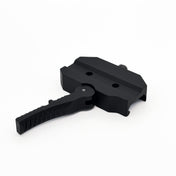
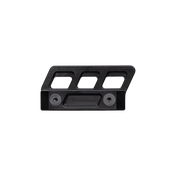
- RMR footprint. Fits every mainstream shotgun red-dot mount: Benelli's Ready For Optics receiver, Beretta A400 optic plate, Mossberg 940 Pro optic cut, Remington 870 Wilson Combat adapter, and every rib-mount Scalarworks/Wilson Combat/TruGlo plate.
- Assembled and tested in Texas. Every unit gets QC'd in a Texas facility — one of the few sub-$300 optics you can say that about. The competition assembles overseas and warehouses in the U.S.
- $249.95. Undercuts the Vortex Viper by ~$50, the Holosun 507C by ~$60, and the Trijicon RMR by $300+.
Where it doesn't fit: if you shoot magnum slugs beyond 150 yards on a regular basis, you want magnification — a Saturn 4x32 prism scope is the better call. If you already own a Trijicon RMR and it works, don't buy a Mercury just to buy one. But for the "one shotgun, four use cases, needs to survive weather" build, the Mercury clears the field.
Related reading: red dot vs. prism scope and what actually makes a reflex sight tick.
Mercury vs. Vortex Viper vs. Holosun 507C vs. Trijicon RMR: Which Shotgun Red Dot Wins?
Here's how the top four RMR-footprint options stack up specifically on shotgun-relevant specs — not pistol specs, not rifle specs.
| Spec | Cosmic Tactical Mercury | Vortex Viper | Holosun 507C X2 | Trijicon RMR Type 2 |
|---|---|---|---|---|
| Price | $249.95 | ~$299 | ~$310 | ~$550 |
| Dot Size | 3 MOA (+ 65 MOA circle overlay) | 6 MOA | 2 MOA (+ 32 MOA circle) | 3.25 or 6.5 MOA (fixed) |
| Reticle Options | 4 selectable | 1 (dot only) | 3 selectable | 1 (dot only) |
| Waterproof | IP68 (3m / 30 min) | IPX7 (1m / 30 min) | IP67 (1m / 30 min) | Submersible 20m |
| Battery Access | Top-loading | Bottom (unmount required) | Side-loading | Bottom (unmount required) |
| Battery Life | 3 years (motion activation) | 30,000 hrs | 50,000 hrs (solar backup) | 4 years |
| Footprint | RMR-compatible | RMR-compatible | RMR-compatible | RMR (original) |
| Made In | Assembled & tested in Texas, USA | Philippines (Vortex designs in USA) | China | Wixom, Michigan, USA |
| Warranty | Limited Lifetime | VIP Unlimited Lifetime | Limited Lifetime | Limited Lifetime |
The Vortex Viper wins on warranty terms — VIP is genuinely the best in the industry, and if you break optics, that matters. The Trijicon RMR wins on build reputation, if you can pay $300 more. The Holosun 507C X2 wins on battery life if you rarely change batteries and don't mind side-loading.
The Mercury wins on the actual field specs that fail first: IP68 ingress protection, top-loading battery, 4-reticle flexibility, and USA final assembly at the lowest price of the four. For a duty shotgun or a hunt-and-defend build, those are the specs that come up in year two of ownership.
Turkey vs. Slug vs. Home-Defense: Which Reticle Wins Per Role?
Nobody buys the same optic for a turkey shotgun and a slug deer gun, but they should be able to. Here's how the Mercury's 4-reticle system maps to each shotgun use case, and how to set it up per shell type.
Turkey (2 3/4" or 3" TSS or lead, extra-full choke): Circle-dot reticle. The 65 MOA outer ring finds fast at 25–45 yards against tree cover, the 3 MOA center dot puts the pattern on the head-and-neck kill zone. Zero at 30 yards using your specific choke and load — patterns shift 3–6 inches across chokes, so pattern first, zero second.
Slug (rifled barrel, 2 3/4" sabot or Foster): 3 MOA dot alone. Zero at 50 yards for point-of-aim / point-of-impact at 100 yards using your specific slug's ballistic table. Most sabot slugs shoot ~2 inches low at 100 with a 50-yard zero; check your ammunition's published trajectory before you dial.
Home defense (00 buck, 3-yard patterning): 65 MOA circle alone or the hybrid pattern. Speed of acquisition beats precision here — your buckshot pattern at 5 yards is already the size of a fist, so an oversized reticle costs nothing and gives you sight picture in low light with an adrenaline dump.
Waterfowl (2 3/4" or 3" steel #2 or #4): 3 MOA dot alone, brightness cranked. Ducks and geese move fast, and swing-and-lead is the technique — a small dot lets you index on the bird's head and swing through cleanly. IP68 rating earns its keep here more than anywhere else.
Can You Mount the Mercury on Any Shotgun?
Mounting a red dot on a shotgun in 2026 is easier than it's ever been. Most modern semi-autos ship optic-ready. Older pumps and doubles need aftermarket plates, but the RMR footprint makes solutions available for nearly every shotgun in current production.
Confirmed direct-fit mount paths for the Mercury (via its RMR footprint):
- Benelli M4, M2, SBE3: Ready For Optics receiver, direct RMR plate mount.
- Beretta A400 Xcel / Xtreme Plus: Beretta OEM optic plate (RMR).
- Mossberg 940 Pro / 500 Retrograde: Mossberg optic-cut receiver, RMR-compatible.
- Remington 870 / V3 Tac-13: Wilson Combat, Scalarworks, or Weaver rail-and-plate combo.
- Mossberg 500 / Maverick 88 (older): XS Sight Systems ghost-ring rail with RMR adapter, or drill-and-tap conversion.
- Rib-mounted (Beretta, Browning, Remington, Winchester barrels): Scalarworks SYNC or TruGlo rib mount, both RMR-compatible.
For a lower-cost DIY route, an aluminum picatinny rail clamped to the receiver's optic cut plus a low-profile RMR-to-picatinny plate is the field-tested path. Total cost: under $60 in mounting hardware.
Frequently Asked Questions
Is a red dot really better than a bead sight on a shotgun?
For anything past 15 yards, yes — a red dot delivers a parallax-free aiming point and lets you focus on the target instead of the front bead. Turkey hunters report 20–30% higher hit rates on beyond-30-yard birds after switching from bead to dot (American Hunter, 2025). For skeet, trap, and bird-in-flight wing shooting, a bead is still faster.
What MOA dot is best for a turkey shotgun?
A 3–4 MOA center dot with a 65 MOA outer circle is the working turkey pattern. The circle finds fast against foliage, the small center dot precisely covers the head-and-neck kill zone at 25–45 yards. The Mercury's circle-dot reticle is exactly this pattern.
Will a red dot hold zero on a 12-gauge with 3-inch magnum loads?
Only if it's rated for shotgun recoil impulses (500G+) and locked into an RMR-footprint mount with the correct torque spec. The Mercury's shockproof rating is validated on magnum shotgun loads, and it carries a limited lifetime warranty and 60-day money-back guarantee — if it doesn't hold, it comes back.
Do I need a magnifier for a shotgun red dot?
Almost never. A magnifier defeats the point of a shotgun optic — fast acquisition at short-to-medium range. If you're shooting slugs at 150+ yards regularly, skip the red dot entirely and mount a Saturn 4x32 prism scope. If you're not, save your money.
Can I use the Mercury on a shotgun and a pistol?
Yes — the RMR footprint fits both. Many shooters run a single Mercury across a range shotgun and a home-defense pistol using two mounting plates. Motion activation and 3-year battery life mean the sight stays ready on whichever platform you pick up. See our reflex vs. prism guide for cross-platform setups.
Bottom Line
The best red dot for a shotgun in 2026 isn't the one with the loudest ad budget — it's the one that survives IP68 rain, cycles through the reticle you need for turkey vs. slug vs. buckshot, and lets you swap the CR2032 without breaking your zero. For the vast majority of shotgun builds, the Cosmic Tactical Mercury covers all three at $249.95. If you're building a piggyback rig or want to run the same optic across shotgun and AR-15 duty, the Mercury + Saturn piggyback bundle is the fastest path there.
Whatever you pick, torque your mount to spec, zero at the range you actually shoot, and pattern your gun with your chosen load before you take it into the field. The best optic in the world can't fix a gun that's never been patterned.
Questions on which mount fits your specific shotgun? Reach out — we shoot too, and we'd rather help you pick the right setup once than sell you the wrong plate twice.

 https://cosmictactical.com