
Key Takeaways
- The Cosmic Tactical Mercury Reflex Sight and Holosun 507C X2 both use the RMR footprint and offer multi-reticle systems, but they take different paths to get there.
- The Mercury comes in $60 cheaper at $249.95, offers 4 selectable reticles (vs 3), carries a higher IP68 waterproof rating, and is assembled in Texas.
- The 507C X2 counters with solar backup power, longer rated battery life, and an established track record.
- If you want proven solar tech, the 507C delivers.
- If you want more reticles, better waterproofing, and a USA-assembled optic for less money, the Mercury is hard to beat.
Mercury vs Holosun 507C X2: Two RMR-Footprint Red Dots Go Head to Head
The Cosmic Tactical Mercury Reflex Sight and the Holosun 507C X2 sit in the same neighborhood: open-emitter reflex sights with multi-reticle systems, RMR-compatible footprints, and price tags that undercut the Trijicon RMR by hundreds of dollars. Both sights target shooters who want feature-rich optics without the $500+ entry fee.
But "same neighborhood" doesn't mean "same house." These two sights make different engineering tradeoffs on battery design, waterproofing, reticle options, and where they're built. This comparison breaks down every spec that matters so you can decide which one belongs on your slide, PCC, or home defense setup.
The red dot sight market is projected to reach $9.8 billion globally by 2026, driven largely by pistol optics adoption in both competitive shooting and everyday carry (Polaris Market Research). Shooters have more choices than ever, which makes spec-for-spec comparisons like this one essential before you spend your money.
Specs at a Glance: Mercury vs Holosun 507C X2
| Spec | Cosmic Tactical Mercury | Holosun 507C X2 |
|---|---|---|
| Price | $249.95 | ~$310 |
| Type | Open-emitter reflex | Open-emitter reflex |
| Footprint | RMR-compatible | RMR-compatible |
| Reticle Options | 4 selectable configurations | 3 selectable (2 MOA dot, 32 MOA circle, circle-dot) |
| Dot Size | 3 MOA | 2 MOA |
| Dot Color | Red or Green (choose at purchase) | Red (green model available separately) |
| Brightness Levels | 9 (8 daylight + 1 NV) | 12 (10 daylight + 2 NV) |
| Battery | CR2032 (top-loading) | CR1632 (side-loading) |
| Battery Life | Up to 3 years (~26,000 hrs) | Up to 50,000 hours |
| Solar Backup | No | Yes (Solar Failsafe) |
| Motion Activation | Yes (auto wake/sleep after 5 min) | Yes (Shake Awake) |
| Waterproof Rating | IP68 (3m / 30 min) | IP67 (1m / 30 min) |
| MOA Adjustment | 1 MOA per click | 1 MOA per click |
| Made In | Assembled & tested in Texas, USA | China |
| Warranty | Limited Lifetime | Limited Lifetime |
Both sights share the same foundation: RMR-compatible footprint, motion-activated power management, multi-reticle systems, and sub-$350 pricing. The differences come down to how each manufacturer prioritized their engineering budget.
Reticle System: 4 Options vs 3
The Mercury Reflex sight gives you 4 selectable reticle configurations compared to the 507C's 3 options (2 MOA dot, 32 MOA circle, or circle-dot combo). Both sights let you switch between reticles on the fly without tools, which means you can run a dot for precision work and switch to a circle-dot for faster target acquisition during drills or competition stages.
The Mercury's 3 MOA dot is slightly larger than the 507C's 2 MOA dot. That's a genuine tradeoff: the 2 MOA dot is better for precision shooting at distance, while the 3 MOA dot is faster to pick up in close-range defensive situations. For most pistol applications inside 25 yards, including home defense and concealed carry, the difference between 2 and 3 MOA is functionally irrelevant. At 25 yards, a 3 MOA dot covers 0.75 inches versus 0.5 inches for a 2 MOA dot. Both are well inside the vital zone.
Where the Mercury pulls ahead is dot color selection. You choose red or green at purchase, which matters if you have color vision considerations or simply shoot in environments where one color contrasts better. The 507C X2 comes in red by default, with a separate green model (the 507C-GR-X2) available at a slightly higher price point.
Battery Life and Power Management
This is where the Holosun 507C X2 has a clear spec advantage. Its rated battery life of up to 50,000 hours at lower brightness settings nearly doubles the Mercury's approximately 26,000-hour (3-year) rating. The 507C also has a solar failsafe panel on top of the housing that can power the dot at lower brightness levels even with a dead battery.
In practical terms, both sights will run for years on a single battery with motion activation enabled. If you follow the standard practice of swapping your battery annually (which you should, regardless of what the spec sheet says), neither sight will ever die on you unexpectedly.
The battery design is where things get interesting for real-world use. The Mercury uses a CR2032 with top-loading access, meaning you can swap the battery without removing the sight from your slide. The 507C X2 uses a CR1632 with a side-loading tray. Both designs keep the sight mounted during battery changes, which is a significant upgrade over the original Trijicon RMR's bottom-loading design that required removing the optic entirely.
The CR2032 battery in the Mercury is also more widely available. You'll find CR2032 cells at every gas station, pharmacy, and grocery store. CR1632 batteries are common enough at battery retailers and online, but they're not as universally stocked on store shelves.
Waterproofing: IP68 vs IP67
The Mercury carries an IP68 waterproof rating, meaning it's tested to withstand submersion at 3 meters for 30 minutes. The 507C X2 is rated IP67, which covers 1 meter for the same duration. Both exceed what most shooters will ever need, but the Mercury's higher rating provides more margin.
If you're running your red dot on a shotgun for waterfowl, mounting it on a PCC for rainy outdoor competitions, or just want peace of mind during a downpour, IP68 means the Mercury can handle more punishment. For standard range use and everyday carry, both ratings are more than sufficient.
Durability and Build Quality
The Holosun 507C X2 uses 7075-T6 aluminum housing, which is the aerospace-grade aluminum standard across high-end optics. Holosun rates it for 5,000G of impact resistance. The 507C has been on the market since 2019 (X2 variant since 2020), giving it a long track record of field testing by law enforcement and competitive shooters.
That said, the 507C isn't without reported issues. Common complaints include battery tray screws loosening over time, small buttons that are difficult to operate with gloved hands, and occasional shake-awake failures requiring a manual button press (Red Dot Heaven). These aren't deal-breakers, but they're worth knowing about.
The Mercury is a newer entrant to the market, which means a shorter track record but also the advantage of designing around known issues in competing products. Its assembly and testing happens in Texas, which gives Cosmic Tactical tighter quality control over each unit that ships. Every Mercury is function-tested before it leaves the facility.
Where Each Sight Wins
Choose the Mercury If:
- Budget matters. At $249.95, you save roughly $60 compared to the 507C X2's street price of $310+. That's money you can put toward ammo, a good holster, or a piggyback bundle with the Saturn 4x32 for a magnified + red dot combo.
- You want green dot from the factory. The Mercury comes in both red and green dot variants at the same price. With the 507C, the green model is a separate SKU that often costs more.
- Waterproofing is a priority. IP68 beats IP67. If your pistol or shotgun sees rain, snow, or mud regularly, the Mercury has more margin.
- USA assembly matters to you. The Mercury is designed, assembled, and tested in Texas. For shooters who prioritize American-made products, this is a meaningful differentiator.
- You want more reticle options. Four selectable configurations vs three gives you more flexibility to match the reticle to your shooting scenario.
Choose the 507C X2 If:
- Solar backup gives you peace of mind. The Solar Failsafe panel means you'll have a working dot even with a completely dead battery (in adequate lighting). No other feature in this price range replicates that redundancy.
- You want the tightest dot possible. The 2 MOA dot is measurably more precise than a 3 MOA dot at distance, which matters for bullseye competition or longer shots.
- Track record matters most. The 507C has been field-tested by thousands of shooters since 2019. If you value years of proven performance data over newer engineering, the Holosun has earned that credibility.
- You need more NV brightness settings. Two night vision-compatible settings vs one gives more granularity if you run night vision gear regularly.
Mounting and Compatibility
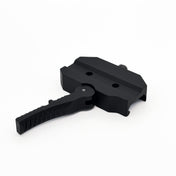
Both the Mercury Reflex Sight and 507C X2 use the RMR footprint, which is the most widely supported mounting standard for pistol red dots. If your slide is cut for an RMR, either sight drops right in. This includes popular pistol models like the Glock 17/19 MOS, Sig P320/P365 with adapter plates, Smith & Wesson M&P M2.0, CZ P-10, and many others.
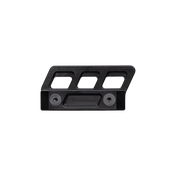
The RMR footprint also means both sights work with the Cosmic Tactical Piggyback Bundle, which mounts the Mercury on top of the Saturn 4x32 prism scope using the removable RMR plate. This gives you a magnified optic for mid-range work and a red dot for CQB on the same rifle.
If you're coming from a different optic or buying your first pistol red dot, you'll likely need an adapter plate or a slide milled specifically for the RMR pattern. Check with your slide manufacturer for compatibility before purchasing either sight.
Price and Value Breakdown
At $249.95, the Mercury undercuts the 507C X2 by approximately $60. Here's what that price difference gets you with each sight:
| Feature | Mercury ($249.95) | 507C X2 (~$310) |
|---|---|---|
| Multi-reticle system | 4 options | 3 options |
| Solar backup | -- | Yes |
| Waterproof depth | 3 meters | 1 meter |
| Green dot option | Same price | Higher price |
| USA assembly | Texas | China |
| Lifetime warranty | Yes | Yes |
Dollar for dollar, the Mercury packs more features at a lower price point. The 507C's premium buys you solar backup power and the security of an established market reputation. Both are covered by lifetime warranties, so long-term value is comparable.
Worth noting: Holosun recently released the 507C X3 at $353, which means the X2 may see further price drops as retailers clear inventory. If you're shopping for a 507C, this is actually a good time to buy the X2 at a discount.
Who Should Buy What: Practical Scenarios
Home Defense Pistol
Either sight works well here. The Mercury's 3 MOA dot is slightly faster to acquire in low light at close range. The 507C's solar backup adds a layer of redundancy if you're worried about a dead battery in an emergency. If your nightstand gun sits for months without range time, motion activation on both sights means the dot will be ready when you pick it up. Edge: tie.
Everyday Carry (EDC)
Both sights are popular EDC choices on the RMR footprint. The Mercury's IP68 rating gives it better protection against sweat, rain, and the general abuse a carry gun takes. The 507C's slimmer profile (due to the smaller CR1632 battery) may sit slightly lower in some holsters. Edge: slight Mercury advantage for environmental protection.
Competition (USPSA/IDPA)
The 507C's 2 MOA dot is measurably better for precision transitions at speed, especially in carry optics division where you're making 15-25 yard shots between steel targets. The Mercury's 4-reticle system gives you more flexibility to switch between stages. Edge: slight 507C advantage for precision-focused competitors.
Rifle or PCC Mount
If you're mounting a reflex sight on an AR-15, PCC, or shotgun, the Mercury's higher waterproof rating and top-loading battery make it more practical for field use. Consider the Piggyback Bundle if you want both a magnified optic and a red dot on the same rifle — the Mercury pairs with the Saturn 4x32 through the RMR plate mount. Edge: Mercury.
What About the Trijicon RMR?
Both the Mercury and 507C X2 exist because the Trijicon RMR Type 2 costs $450-550. The RMR is still the gold standard for duty use and has the longest track record, but it only offers a single reticle per model, requires removing the optic for battery changes, and doesn't have motion activation or a multi-reticle system.
If budget isn't a constraint and you want the most proven optic available, the RMR Type 2 remains the benchmark. But for most shooters, both the Mercury and 507C deliver 90%+ of the RMR's performance at roughly half the cost — with features the RMR doesn't offer at any price.
For more on how reflex sights compare to other optic types like prism scopes, check our detailed breakdown. And if you're curious about whether an etched reticle might be better for your eyes, read our guide on whether prism sights are worth it.
Frequently Asked Questions
Does the Mercury fit the same slides as the Holosun 507C?
Yes. Both sights use the RMR-compatible mounting footprint. If your slide is milled for a Trijicon RMR or Holosun 507C, the Mercury will drop right in using the same screw pattern and mounting holes. Always verify your specific slide cut with the manufacturer, but RMR-pattern compatibility covers the vast majority of optics-ready pistols on the market.
Is the 507C X2 still worth buying now that the X3 is out?
Yes. The X3 adds a forward-facing light sensor for better auto-brightness, but the X2's core performance hasn't changed. With the X3 launching at $353, the X2 is available at discounted prices around $280-310, making it an even stronger value. The X2 remains a proven, reliable optic.
Can I use either sight with night vision?
Both sights have night vision-compatible brightness settings. The 507C X2 offers 2 NV settings for more granularity, while the Mercury has 1 NV-compatible setting. If you regularly shoot under NODs, the 507C's extra NV setting may be worth the premium. For occasional NV use, either sight works.
Which is better for someone with astigmatism?
Both are open-emitter reflex sights that project a dot onto glass, which means astigmatism can cause the dot to appear fuzzy or starburst-shaped regardless of brand. If astigmatism affects your shooting, consider a prism scope with an etched reticle like the Saturn 4x32, which produces a sharp, clean reticle regardless of your eye condition. Read our full guide on optics for shooters with astigmatism.
What's the warranty on each sight?
Both the Mercury and 507C X2 carry limited lifetime warranties. Cosmic Tactical backs the Mercury with a no-BS lifetime warranty and a 60-day money-back guarantee, meaning you can return it for a full refund within 60 days if it doesn't meet your expectations. Holosun's warranty covers manufacturing defects for the life of the original purchaser.

 https://cosmictactical.com